Creating Sustainable Affordable Housing through Community-Driven Economic Development
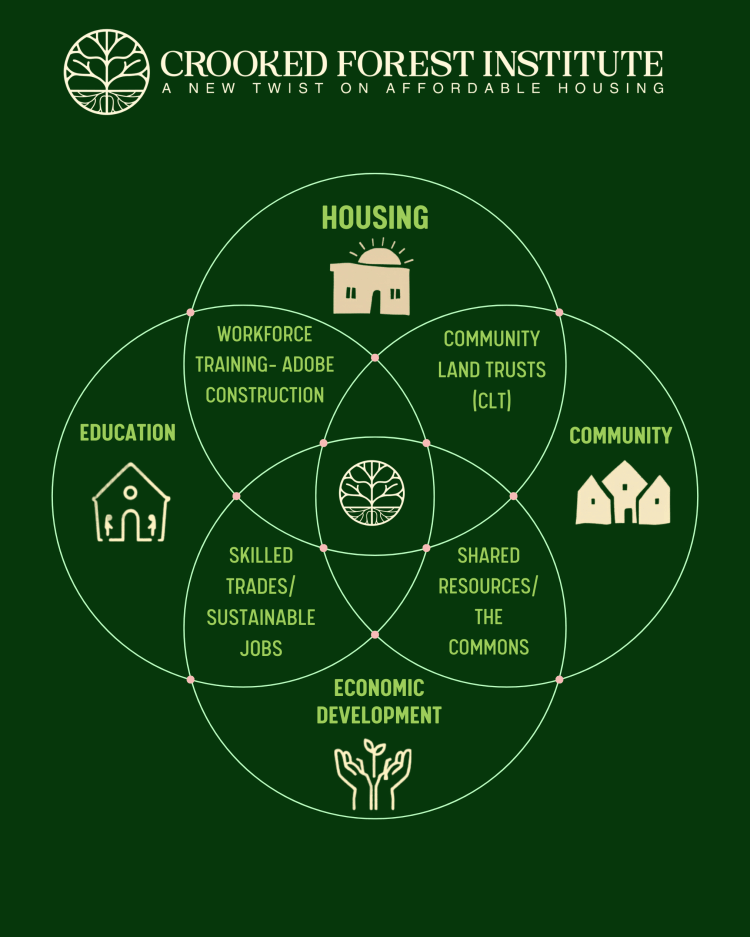
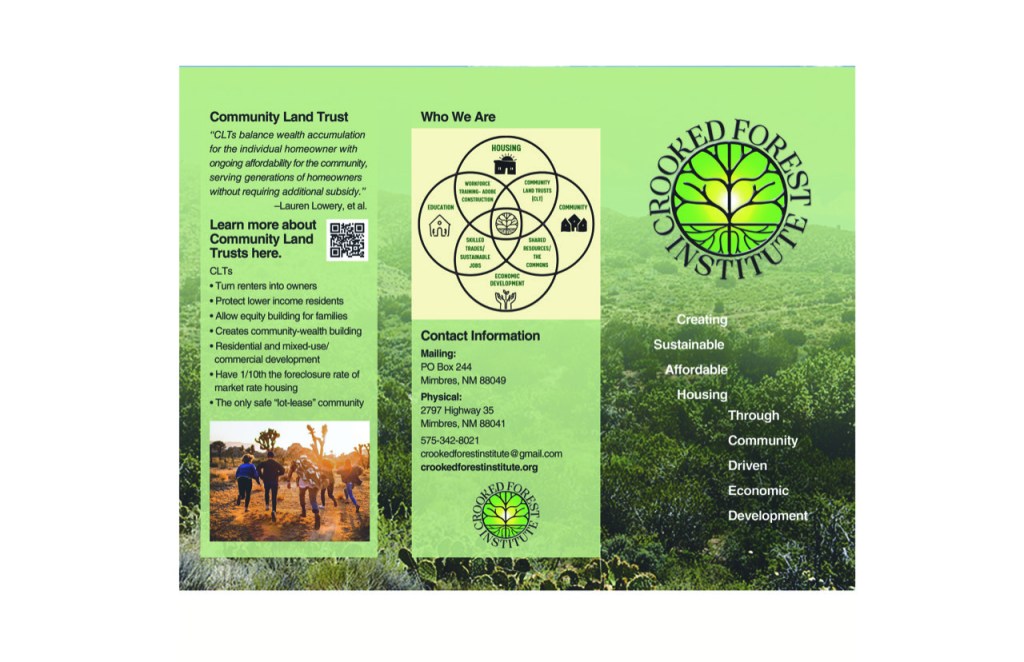
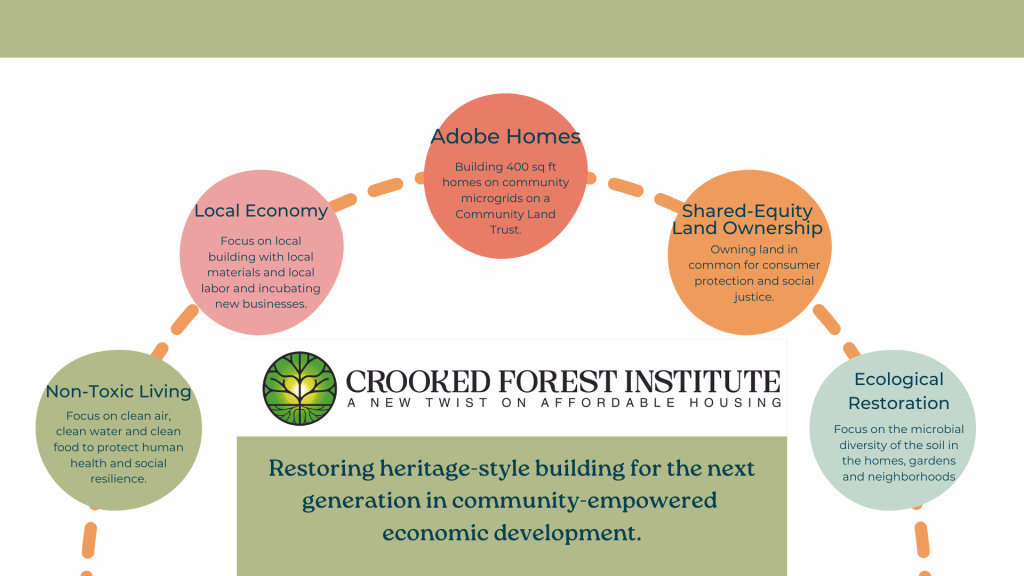
Our project in Southwestern New Mexico focuses on affordable housing using local materials, community microgrids, Community Land Trusts and training the next generation of tradespeople.
It’s more than just a single neighborhood designed for its microbiome— it’s a sustainable neighborhood template that is designed to go viral.
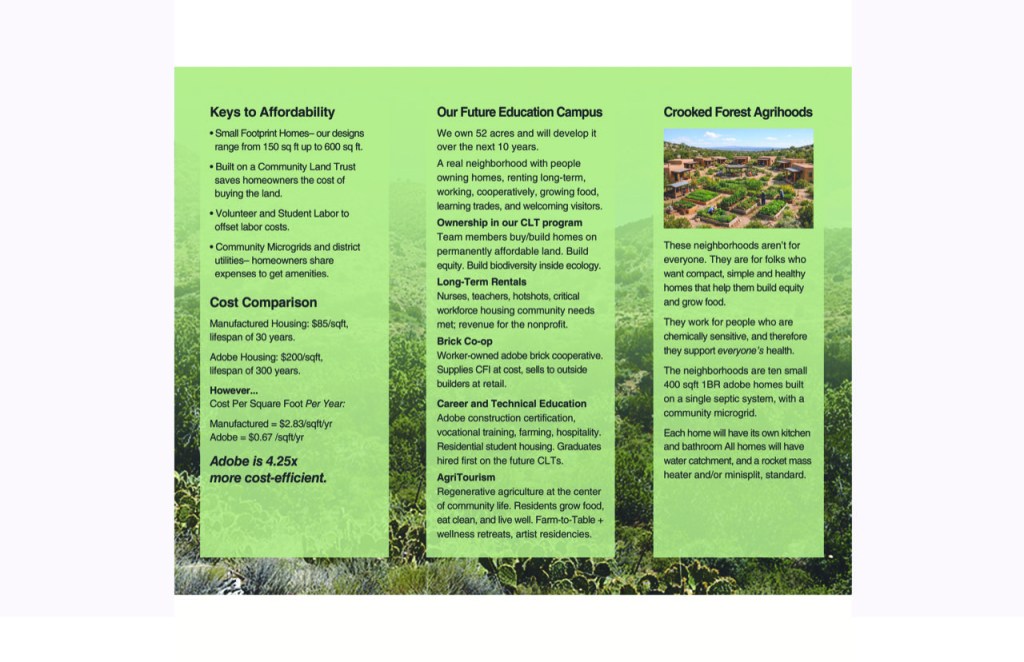
We are re-envisioning neighborhood creation. What can we do between a subdivision and an RV park? A “Resiliency Neighborhood” is ten architect-designed adobe homes on shared infrastructure with community gardens on a community land trust. This is workforce housing, creative economy housing, elder housing and common sense. When you design housing that works for sensitive people, it makes everyone else healthier.
We build and train people to build Adobe structures according to the New Mexico Earthen Building Code as safe, affordable, elegant, clean, fire-proof homes with clean energy and smart water management. Learn More.
Regenerative Farming
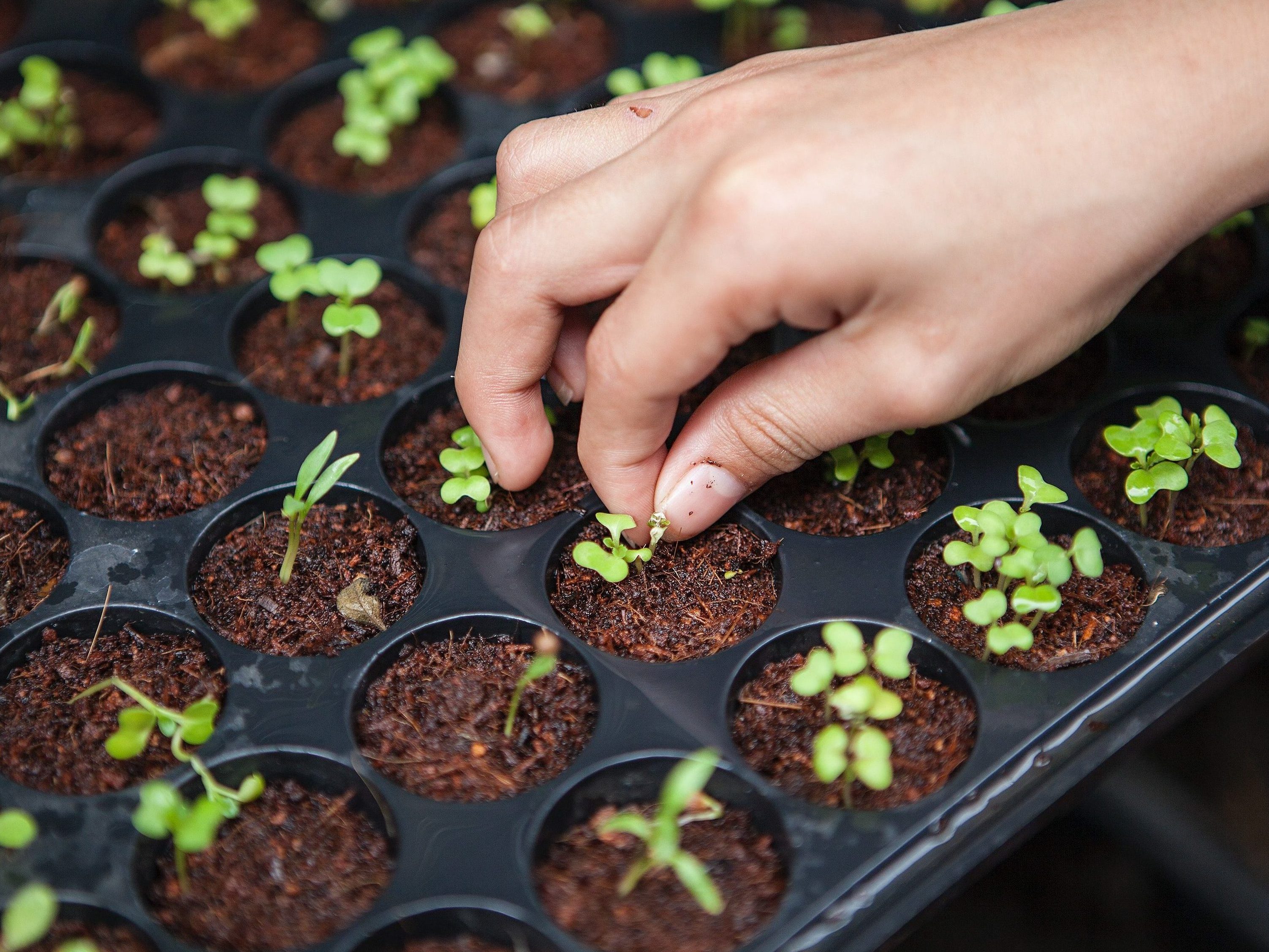
We focus on food sovereignty using biodynamic farming and regenerative agriculture practices in our high desert setting, growing enough food to share and teaching others how to do the same. Learn More.
Co-working
We create clean work spaces and opportunities for collaborative entrepreneurship. A business incubator focused on sustainable businesses who are growing and reinventing our common future. Learn More.
Step One
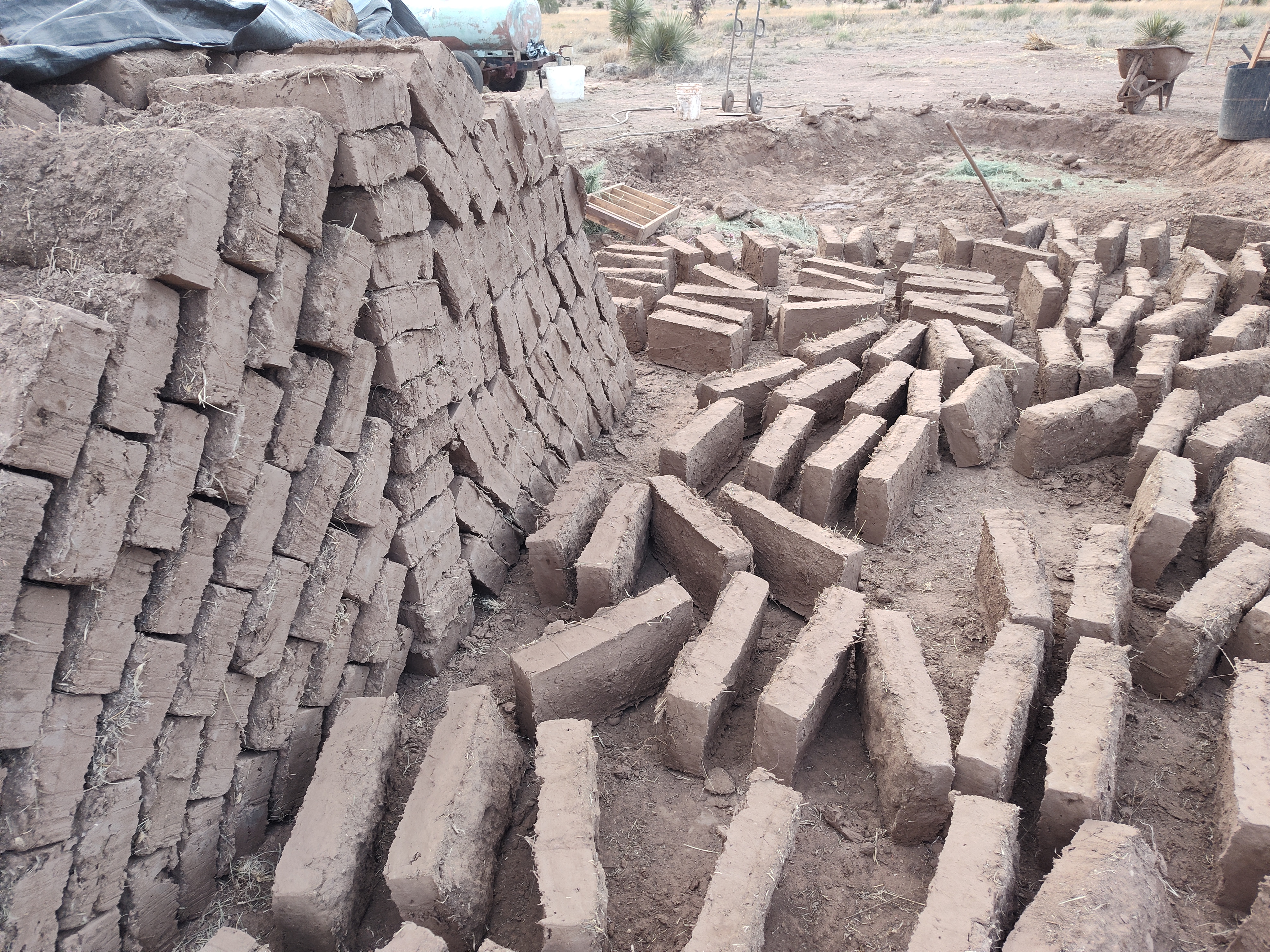
1.Brick Manufacturing Establish a local Compressed Earth Block (CEB) and adobe brick manufacturing operation to create our own bricks from clean, local soil.
Step Two
2. Build Our Education Campus Build a prototype neighborhood (or 2) on our 52 acres; Ten cabins with shared bathroom building for workforce housing, or ten small homes on shared infrastructure.
Step Three
3. More Affordable Housing Each year, our graduates work on developing homes and infrastructure on a nearby 100 acre CLT– Community Land Trust.
This morning, Holly was interviewed at our local community radio, KURU 89.1FM, by Maree McHugh on her show Tuesday Morning Beat. Their conversation touched on multiple aspects of the affordable housing crisis in the country, in Silver City and GrantContinue reading “Here’s the Recording”
Hey All, Just a note to let you know that our “inner circle” meets inside our app. For example, tomorrow is our Local Progamming zoom. The link will automatically be posted inside the app. (Also–> here it is in caseContinue reading “Join us inside! Our App is our “Online Clubhouse””
Our vision is a world in which health of the human family thrives because the health of the ecology in which it is located, and from which it is inseparable, is clean, resilient, diverse and prioritized.
Mission
We design, build and propagate resiliency neighborhoods for low-income and sensitive people in a way that leads to home ownership, food sovereignty, vibrant health and liberation from environmental and economic injustice.
It is with recognition and respect that we acknowledge that the 52 acres of land that Crooked Forest Institute is stewarding is the ancestral and unceded territory of the Chiricahua Apache People. This larger area, including the Gila Wilderness, is known to them as “Nde Benah.”
Our Core Values
Justice— We take responsibility for creating and embodying systems that liberate us from injustices environmentally, socially and economically. This is reflected in approaching our relationships with courage, vulnerability, honesty, expressing our own truths, and listening to the truths of others. ________________________
Innovation— We value imagination that finds different and better housing solutions for marginalized communities, including for sensitive people. This is reflected in our ability to be resourceful, creative, and continually be in a state of growth and learning. We are committed to learning with others locally and nationally. ________________________
Inclusion— We recognize the richness that comes from collaboration among diverse partners. Anti-racism is a process we are committed to as we center the inherent dignity and equality of each person within the human family. This is reflected in our ongoing commitment to learn from the wisdom of one another and bring awareness to the power that exists within our work. ________________________
Biodiversity— We see the health of the human family as a reflection of the ecology in which it belongs. This is reflected in honoring, protecting, and nourishing regenerative systems to improve the health of the whole. ________________________
Service to the Community— We affirm that individual and collective productivity requires the stability that comes from clean, safe housing for marginalized people, including for sensitive people. We utilize a regenerative approach to community capacity building that enables us all to flourish on our own terms and creates new ways to catalyze sustainability
Every once in a while, you will come across a single tree in the forest that got broken at a 90 degree angle and still grew anyway towards the sunlight.
In Poland, there is a whole forest of these individual crooked trees that recovered. There are 400 trees that experienced a cataclysm and then grew back…together. That’s us.
We are:
Resilient
Resourceful
Alive
Growing, and
Working Together.
What do you mean by “Sensitive People?”
Sensitive people are people who have no choice but to create a specialized environment in which they can thrive. Sensitivities are physical, neurological and biological responses to a changing environment, with social and emotional sequelae. When modern life normalizes environmental elements that injure, Sensitive people need to create micro-environments that allow them to recover from simply being in that world.
Types of Sensitivity
Environmental Sensitivity– While the prevalence of 80,000+ new chemicals in our environment since 1945 is “normal” There is a significant proportion (up to 25%) of the population who have to avoid them as much as possible to stay healthy and productive. This vulnerability is genetic, so modifying environment is mandatory. There is an acute, humanitarian need to provide housing for a segment of this growing population, as they are physically unable to stay healthy in conventionally built housing. Many can end up living in their cars and becoming environmental refugees.
Neurodivergence– For the neurodivergent population, people on the spectrum that includes autism and ADHD, there is often also a neurological imperative to limit sounds, smells, lighting and certain tactile materials in order to protect equilibrium. Did you know that Autism and ADHD are connected to Chemical Intolerance?
Highly Sensitive Person (HSP)– In addition to controlling exposure to physical, environmental stressors, HSPs need to also modulate sensory and emotional input and need to avoid exposure to stress and violence in media in order to regulate equilibrium, but can enjoy extreme subtleties in music, food, art and nature.
The Neurodivergent population and HSPs are disproportionately represented in the population of environmentally ill people. It’s a co-morbidities cluster. Are you Sensitive? Learn More.






 Crooked Forest Institute